

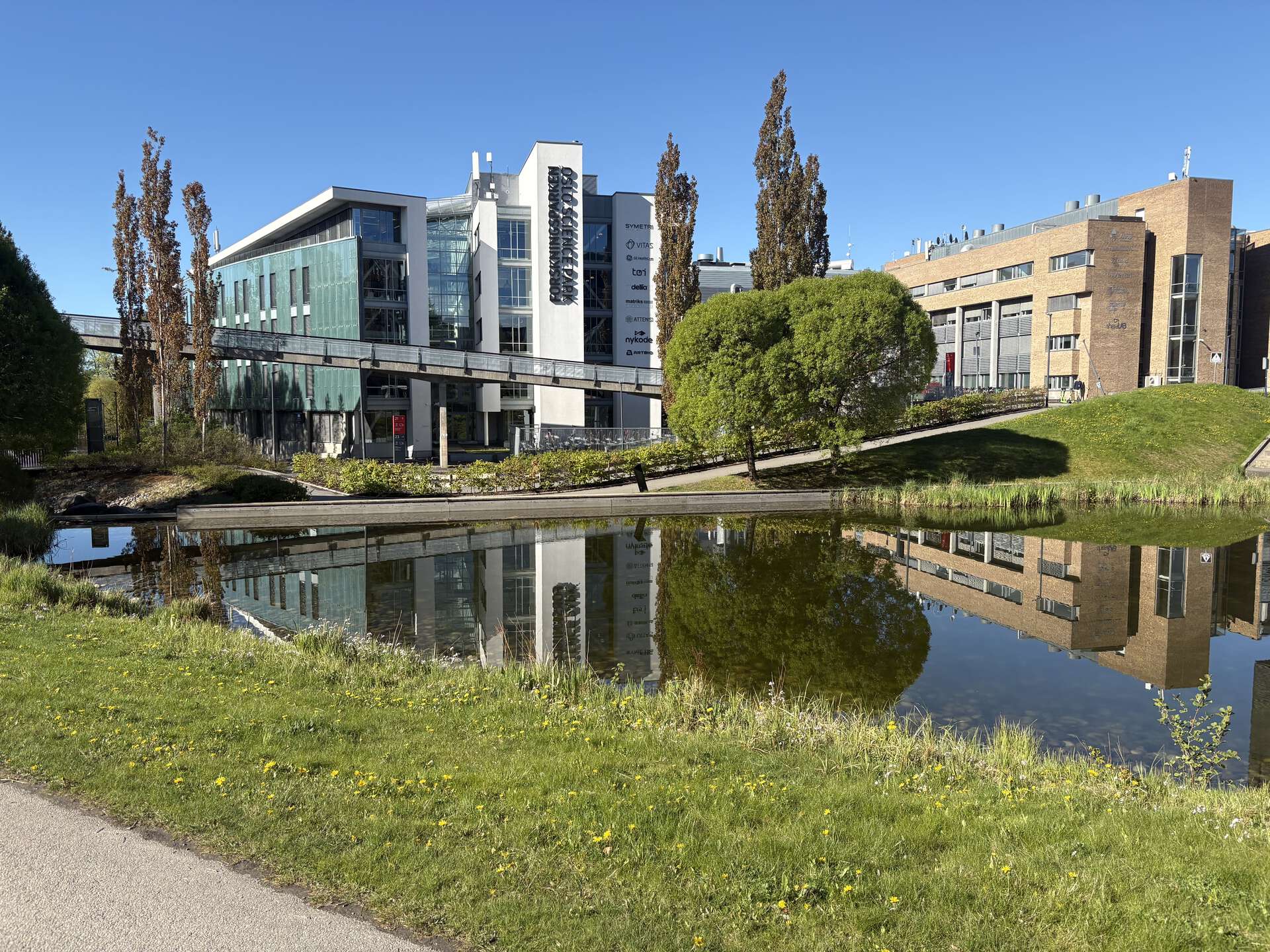
The 3rd Norwegian Symposium on Proteomics and Biological Mass Spectrometry took place on 11–12 May 2026 at Oslo Science City, gathering close to 100 participants for two days of talks, posters and networking. The symposium was jointly organised by the National network of Advanced Proteomics Infrastructure (NAPI) and the Norwegian Proteomics Society (NPS), bringing together researchers, technology developers and core facility scientists working across biological mass spectrometry, proteomics, metabolomics and spatial omics in Norway.
Following the first symposium at the Grand Hotel in 2022 and the second at Holmen Fjordhotell in 2024, this year’s meeting marked the beginning of what is becoming an established national tradition for the Norwegian proteomics community. This year the symposium was held at Oslo Science City- located between Oslo university Hospital and the main University of Oslo campus – in close proximity the new Life Science Building which will become a central hub for biological mass spectrometry in the coming years.
A central theme of this year’s symposium was the increasing momentum and potential of clinical proteomics in precision medicine, biomarker discovery and translational research. The breadth of presentations and the strong participation from both academia and infrastructure environments reflected how rapidly the Norwegian proteomics field has developed in recent years.
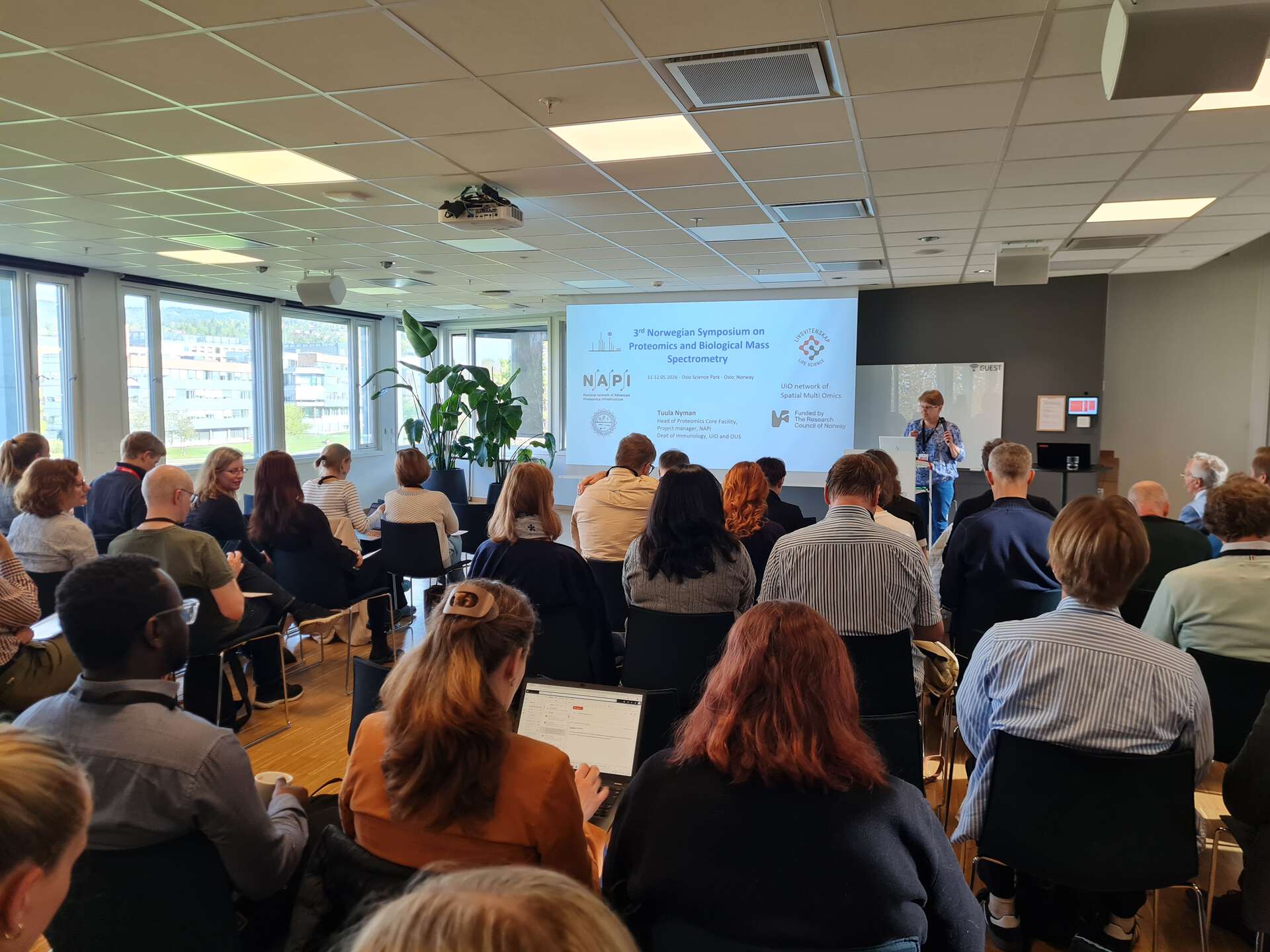
Day 1 - Clinical proteomics and spatial biology
This year’s keynote presentations reflect both the breath of and future ambition of Norwegian proteomics. The symposium was opened by Tuula A. Nyman, project manager of NAPI, followed by a session on Clinical omics for precision medicine. The first keynote speaker was Prof. Jonas Bergquist (Uppsala University) who presented data on how proteomics of cerebrospinal fluid and other difficult-to-access clinical samples can help delineate links between mental health and neurodegenerative disease and hormonal changes during endocrine-sensitive life stages. Dr. Christian Prebensen from Oslo University Hospital introduced SEPSOMICS — an ambitious, ongoing multi-omics initiative that aims to subgroup sepsis patients based on immune response patterns using a cohort of more than 800 emergency department patients.
The afternoon session focused on Spatial omics and metabolomics, with a keynote presentation from Prof. Isabelle Fournier (PRISM, Univ. of Lille) who presented their impressive portfolio on how to use MALDI imaging, image-guided micro-proteomics and machine learning to map tumor ecosystems, as well as the SpiderMass technology, which enables real-time molecular analysis during surgery – literally bringing biological MS to direct clinical use. Dr. Sebastian Krossa from NTNU provided a comprehensive perspective on the opportunities and challenges of MALDI Mass Spectrometry Imaging for integrated multi-omics research workflows, followed by prof. Marcel Kwiatkowski (UiB) who explained how tracer-based proteo-metabolomics enables disentangling metabolic and epigenetic regulation.
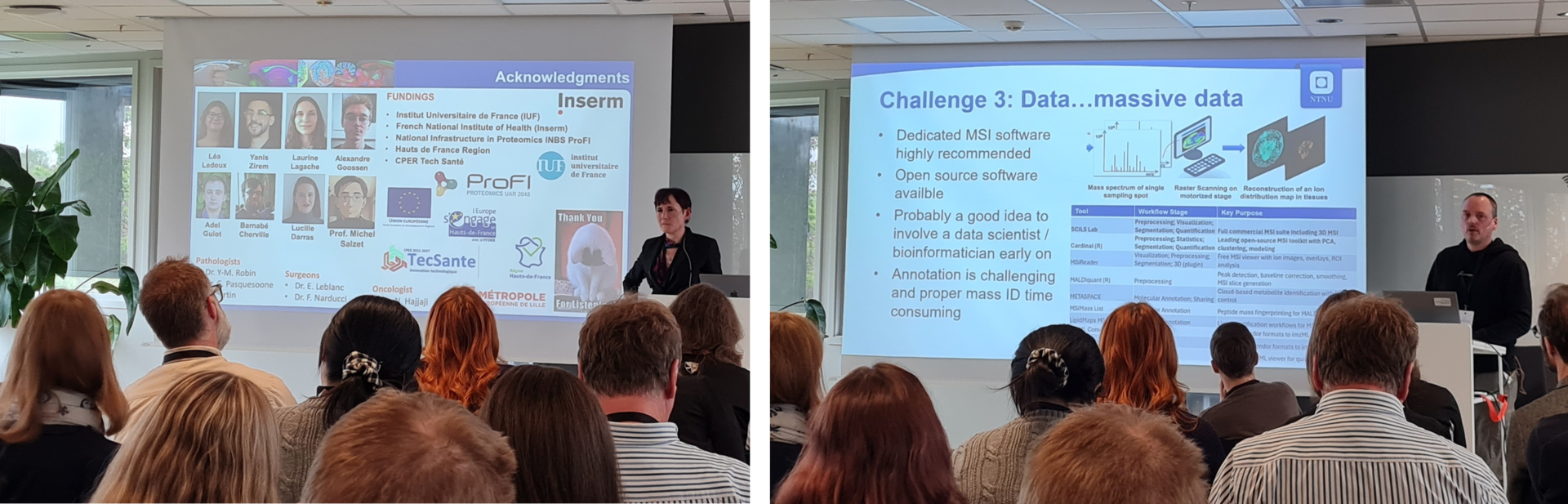
Day 2 - Plasma proteomics, innovation and clinical implementation
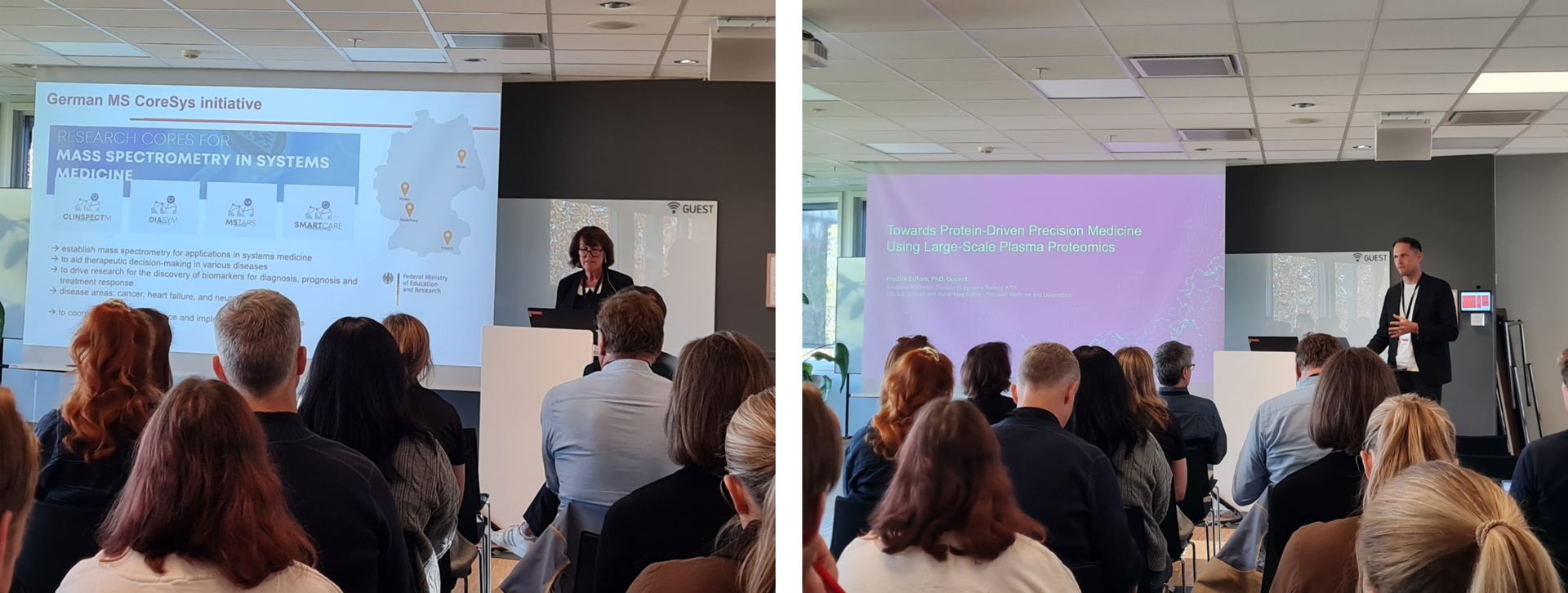
The first session of day two focused on the opportunities and challenges for implementing LC-MS based plasma proteomics for biomarker discovery and clinical monitoring: Prof. Stefanie Hauck (Helmholtz-Munich) presented results from Germany-wide ring trials within the ClinspectM consortium and MSCoreSys initiative. Her talk demonstrated that a substantial fraction of FDA-approved plasma biomarkers can now be reproducibly quantified across laboratories using MS-based workflows but also emphasized the importance of reproducible preanalytical workflow, starting already at the point of plasma centrifugation. Prof. Fredrik Edfors (SciLifeLab, KTH, Stockholm) presented work from the Human Disease Blood Resource within the Human Protein Atlas initiative, where large-scale plasma proteomics using Olink and SomaLogic has now been complemented by targeted mass spectrometry. He highlighted the value of targeted MS workflows, including the use of Quantitative Recombinant Protein Standards, for reproducible, quantitative analysis of plasma protein biomarkers.
From research to innovation and clinical implementation
The final session of the symposium focused on the transgression from research to clinical implementation and innovation: Dr. Annelaura Bach Nielsen (Bispebjerg and Frederiksberg Hospital) described how MS proteomics and machine learning is currently being integrated as part of a clinical proteomics framework in the routine clinical laboratory infrastructure at their hospital, which accelerates translation from biomarker discovery to deployable assays, pushing towards closing the long-standing gap between MS-based proteomics research and real-world clinical utility. The final keynote of the symposium was given by Dr. Nicolai Bache, one of the founding members of EvoSep, who captured the audience with the path from early innovation in liquid chromatography to maturation of a global, successful company product which today is integral to many proteomics workflows - pointing out the importance of perseverance and not straying from the vision.
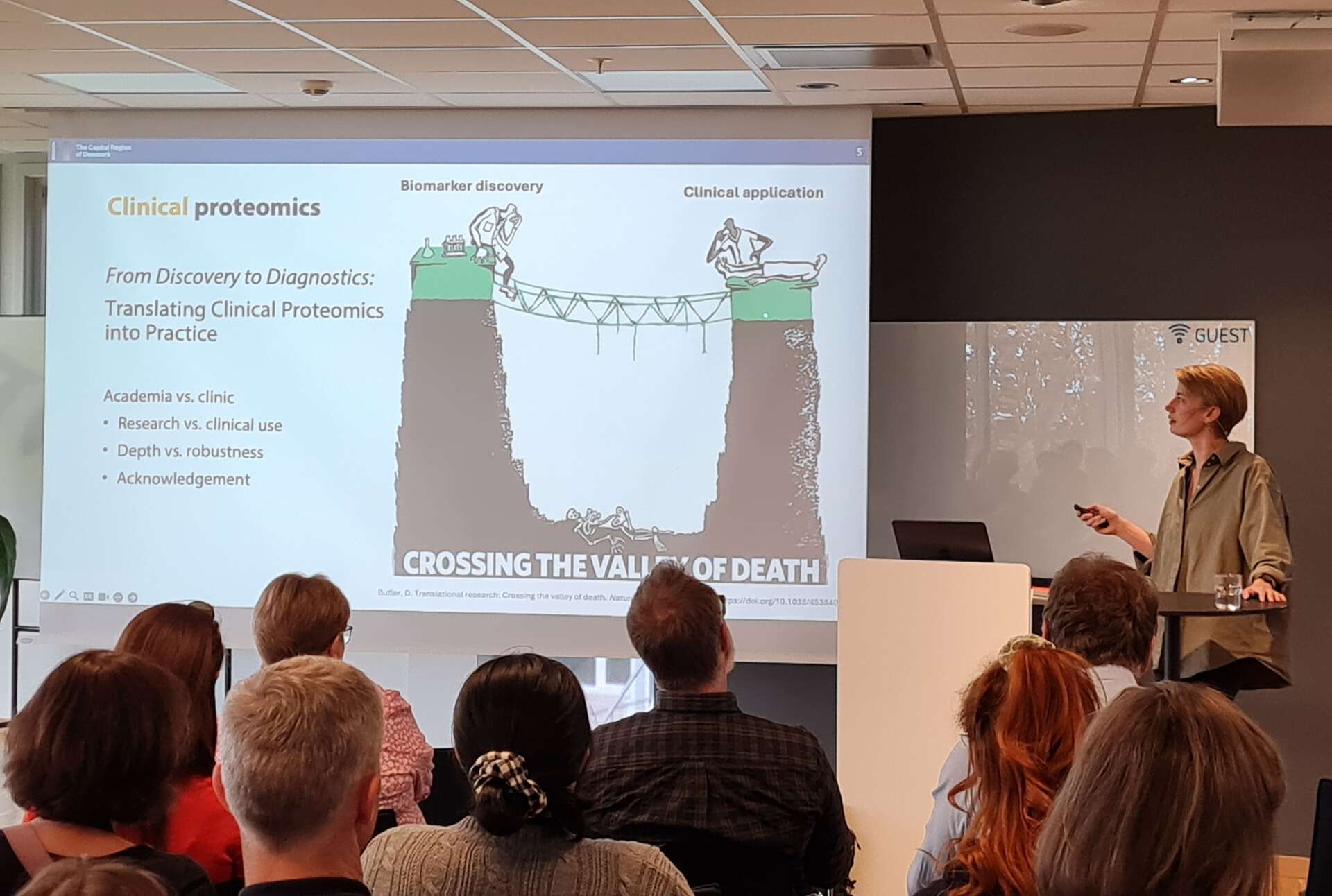
Submitted abstracts show the breadth of biological mass spectrometry research on Norway
For the first time, symposium participants could submit abstracts for oral presentation or poster, making the symposium a great arena for project discussions. Each session included short presentations from selected abstracts – including topics as dried blood spot analysis, miniaturized LC-systems for sterol detection, H/D exchange for structural biology, and concordant proteome and metabolome dynamics, with presenting authors at all career stages from MSc to professors. The poster session included a nice mix of scientific abstracts and presentations of NAPI node proteomic infrastructures in Oslo, Ås, Bergen, Trondheim and Tromsø.
A social event for networking, meeting old and making new friends
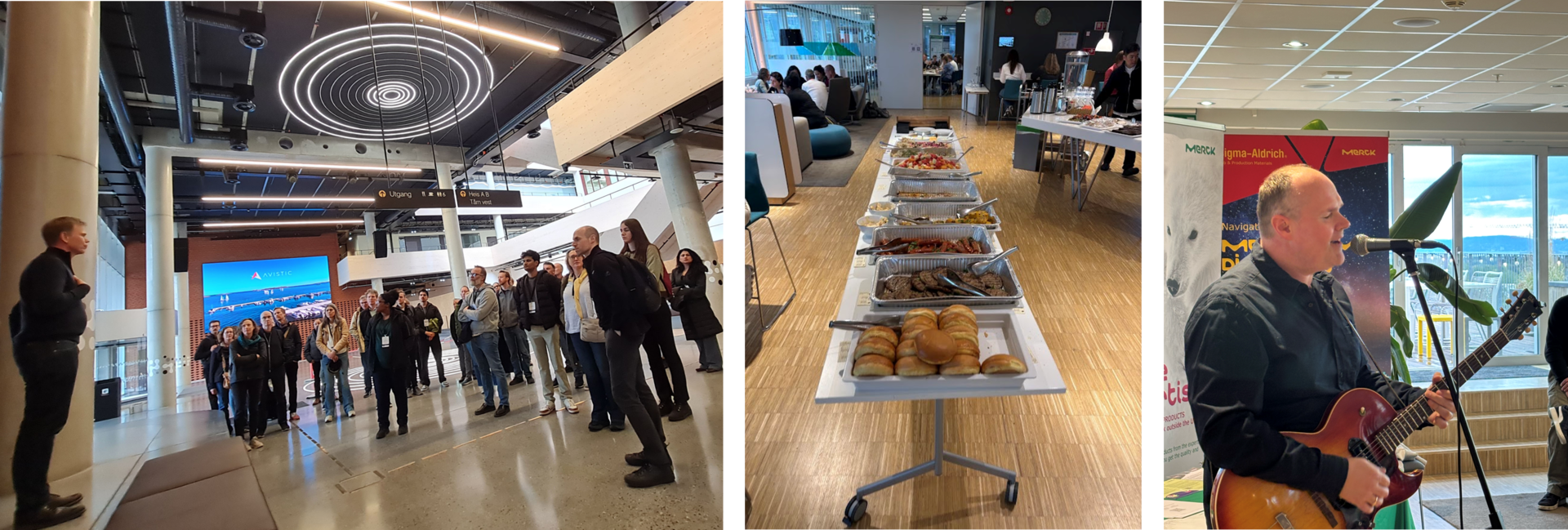
A key component of every in-person scientific event is forging old and new friendships and collaborations over coffee and food. The afternoon of Day 1 included a guided tour of the new Life Science Building, followed by a poster session, live jazz and an indoor rooftop barbeque due to an unfortunate mix-up with the weather booking. During the dinner we enjoyed a live musical contribution by Svein Erik Martinsen Ånested, one of Norway´s finest jazz guitarists, giving homage to all the struggling scientists with songs on the mystical Reviewer #2 ("Spooky"), desk rejection ("Gonna Get Drunk") and finally accepted paper ("I Want to Dance with Somebody").
Thank you to our sponsors and funding bodies
We would like to thank event funding from UiO LifeScience and the Research Council of Norway and also acknowledge our sponsors, Bruker, Waters Corporation, Thermo Fisher Scientific, Merck, Evosep and Olink, for contributing to the symposium and helping create a vibrant meeting environment throughout the two days.
A future ambition for clinical proteomics in the Nordics
A recurring message across the two days was that MS-based proteomics is now approaching the point where it can move from a research tool into a routine part of clinical decision-making — and that the next few years will be decisive. The German and Danish examples shown by Stefanie Hauck and Annelaura Bach Nielsen made the opportunity concrete: with standardized preanalytical workflows, ring-trial-validated assays and close integration between mass spectrometry laboratories and hospital infrastructure, plasma and tissue proteomics can begin to deliver clinically actionable measurements at scale. Norway should share this ambition with Denmark and Sweden – with coordinated, nordic effort and investments from clinical stakeholders and research infrastructure funders.
To learn more about the Nordic ambition to bring plasma proteomics to clinical utility, see a recent interview with Fredrik Edfors from KTH/SciLifeLab, co-founder of ProteomeEdge which bridges discovery with clinical utility by providing innovative panels for multiplexed, targeted quantitative MS proteomics of biofluids (link).


